Monday, December 30, 2013

Death of Bernice Vanderveen 1945-2013


Vanderveen, Bernice

Passed away peacefully on June 28th, 2013 surrounded by her loving family at Ian Anderson House, Oakville. Beloved husband of John for 32 wonderful years. Cherished mom of DeeAnn, and predeceased by her daughter Terry (1987). Proud Grammie of Hailey and Jordan. Bernice will be very sadly missed by her sister, brother, sister-in-laws, brother-in-laws, nieces, nephews and her many friends.

A Celebration of Bernice’s life will be held on Friday August 9th, 2013 at Knox Presbyterian Church, 89 Dunn Street Oakville at 11:00 a.m.

As expressions of sympathy, donations to Ian Anderson House would be appreciated.

A Book of Memories may be signed at www.wardfuneralhome.com


Wednesday, December 18, 2013

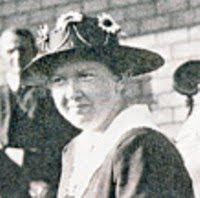
Vera Peacock, daughter of Fred and Vietta

                                       Photo from Ancestry.com (S.T.)

Children of Eileen Peacock Berg

          Leona, Bernice and David Berg.  Click on Photo for full view

Helen Peacock 1935 - 2009


        Helen Peacock at the farm on the Kirk Line. Photo from B.H.

Tuesday, November 12, 2013

James Kennedy, son of Wm Kennedy and Gertrude Peacock

The death occurred in Huntsville on Thursday, October 3, 2013. Jim Kennedy of Huntsville at the age 70. Formerly of Bracebridge, Woodstock, Sudbury and Ancaster.

Beloved husband of Virginia "Ginny" (nee Toohey). Loving father of Jim Jr., Matt, Debbie Kennedy, Tim Clark and Leslie Rohonczy and daughters of his heart Merritt Slusarczyk and Paige Foster. Dear brother of Mary Green, Jeanne Page and predeceased by Elmer, Betty Hunter and Viola Botting. Missed by grandchildren, nieces and nephews. Jim will forever be remembered for his love of Family, hockey and country music.

Donations in his memory can be made to the Canadian Diabetes Association, the Canadian Cancer Society or the Ontario Heart and Stroke Foundation, would be appreciated by the family.

In accordance with Jim's wishes, a private family memorial will be held at a later date.

www.muskokafunerals.com


Wednesday, October 30, 2013

Family of Ken and Denise Peacock

    Click on photo to enlarge it.   Marriage of Ken and Denise's daughter, Lorie, in May 2013        

Sunday, August 11, 2013

Is it ANTRIM or DERRY?

I found the following on the familysearch.org website today which explains why there is confusion over whether the North East Liberties of Coleraine are in Derry County or in Antrim County.

"The county was founded in 1613 as part of the Plantation of Ulster by King James I of England, and twelve London guilds were contracted to develop it. They were also to rebuild the settlement of Derry. In recognition of their work, King James I named the new city and county after the London companies by adding the prefix "London" to "Derry".
Prior to 1613 what became County Londonderry used to be parts of different counties: County Coleraine; the barony of Loughinsholin in County Tyrone; the North-East Liberties of Coleraine in County Antrim; and the North-West Liberties of Londonderry in County Donegal."

Friday, June 28, 2013

Kensington Area of Philadelphia

Peacocks were involved in carpet weaving in Philadelphia for several generations.  This website discusses the development of the industry.

http://www.workshopoftheworld.com/kensington/kensington.html

"Traditionally, Kensington was known as the original hub of working class Philadelphia, with both native and immigrant workers living close to their work sites or working at home. Early nineteenth century industry in the area was diverse; it included glass factories and potteries, wagon and machine works, and a chemical factory. Many of the earlier sites were located in West Kensington (west of Front Street), spreading north from the Spring Garden District and Northern Liberties. However, the textile trades came to dominate Kensington by the mid-nineteenth century. The genesis of the ingrain carpet industry was centered around Oxford and Howard Streets in West Kensington, 1 where some mills still stand. Other early carpet mills in this area are now gone, but they included James Gay's Park Carpet Mill, the Dornan Brothers' Monitor Carpet Mill, William J. Hogg's Oxford Carpet Mill, the Stinson Brothers' Columbia Carpet Mill, and the carpet mills of Horner Brothers, and Ivins, Dietz, and Magee (later of Hardwick and Magee). The earliest carpet factories operated mainly through "outwork" the owners providing yarns to workers who hand loomed the goods in their homes. As these small textile concerns grew, their owners built small factories in East Kensington. 2 Associated textile trades, such as dye works, yarn factories, woolen and worsted mills, 3 cotton mills, and even textile machinery factories were often located in the same building or complex. After the 1860s, Kensington was filled with two story brick rowhouses and steam powered mills. In 1883, Lorin Blodget described the northward expansion of the area as having had rapid and successful development from vacant fields a few years ago, to a densely built up city, all of which is recent, and most of it within ten or twelve years. It is wellbuilt, with broad and well paved streets, the mills being especially well located, and many of those recently erected being fine specimens of architecture 4....

Small firms comprised most of the textile industry in Kensington in the nineteenth century. For example, in 1850, most of the district's 126 textile firms each had only one owner and few employees on site. 6 At the same time, one third of the firms and workers in textiles in Philadelphia were in Kensington. 7 Irish, English, Scotch, and German immigrants, as well as native workers and owners lived in the neighborhood, although not always harmoniously, as the nativist riots of the 1840s indicated. 8 These 4,000 plus workers maintained a tradition of handlooms into the 1880s. Handloom operators were predominately male, with female workers often working in the power mills tending looms as well as performing other service tasks. 9"

Thursday, June 6, 2013

Irish Immigration to Scotland: First half of 19th century


                  Photo from: http://www.irish-genealogy-toolkit.com/Irish-emigration.html )


     In the 1841 Scottish census, there is a Thomas Peacock  living in Gorbals who could be our Thomas before he was married.  The other surnames do not appear in the index for the 1831 census for Ballyrashane, but appear  in the Coleraine area.  The census was normally taken in the spring.  Gorbals is a part of the city of Glasgow south of the Clyde River.


SCOTLAND 1841   Place: Gorbals -Lanarkshire Enumeration District: 13

Civil Parish: Gorbals Ecclesiastical Parish, Village or Island: Gorbals
Folio: 13 Page: 27 Address: Melville St  (Source:  Free Cen website)

Surname First name(s) Sex Age Occupation Where Born Remarks

MCCOOK Robert M 20 Cotton Hand Loom Weaver Ireland

MCCOOK Sarah F 24 Ireland

MCCOOK James M 1 Lanarkshire

MCCOOK William M 22 Labourer Ireland

MCCOOK Margaret F 22 Female Servant Ireland

ROBERTSON Robert M 22 Joiner Journeyman Ireland

MCCALASTER James M 20 Cotton Hand Loom Weaver Ireland

PEACOCK Thomas M 23 Labourer Ireland


The article below gives some background to why this could be possible.
(Taken from the following website:  http://www.irish-genealogy-toolkit.com/Irish-emigration.html )

Irish immigration to Scotland: First half of 19th century
     Irish immigration to Scotland was part of a well-established feature of early 19th century life in Ireland: the annual harvest migration. Since Scotland was Ireland's closest neighbour (only 13 miles separate the two countries at one point), it was an obvious choice for those that lived in the north of the island.

     In the 1820s, up to 8,000 economic migrants crossed back and forth across the Irish Sea every year, bound for seasonal agricultural work or other temporary contractual work in northern England, Wales and Scotland. By the early 1840s, the number making the harvest migration alone had risen to about 25,000.

     Permanent settlement usually required a greater skill base than agricultural labourers held. Most of the non-harvest migrants came with highly valued textiles and jute knowledge and came from the Irish counties where linen and yarn were produced – Derry, Donegal, Monaghan, Sligo and Tyrone.

     These early trickles of Irish immigration to Scotland do not conform to the stereotypes of migration in later years which were largely about the arrival of unskilled and destitute people.

     While most of the temporary migrants and probably a small proportion of the skilled workers eventually returned home to Ireland, some chose to settle permanently. This was more likely to happen in Scotland than in England or Wales, possibly because of the strong cultural ties between Scotland and Ulster, the province which provided most migrants to Scottish industries, especially in textiles.

     Up to the 1830s, Scotland could offer if not rich pickings, at least a chance of a regular wage. The country was experiencing a boom in the construction of homes, factories, roads, canals and other infrastructure while the coal, textile and steel industries were also increasing production. Whole towns grew up to provide a workforce to some of these industries and saw the development of significant Irish communities within them. In Girvan, Ayrshire, for example, some three-quarters of the 6,000 population was Irish-born in 1831.

     By 1841, when the earliest Scottish census was taken, some 125,321 (4.8%) of the 2.6million population was Ireland-born. In contrast, the Irish-born made up only 1.8% in England and just 0.78% in Wales.

Largest centres of Irish settlement:
(Irish-born as % of total pop) 1851

Dundee -18.9

Glasgow - 18.2

Paisley - 12.7

Kilmarnock - 12.1

The next decade saw the Great Famine exodus from Ireland when the poor and starving arrived in ports in desperate straits. By 1851, the Irish-born population of Scotland had reached 7.2%. The Irish were to be found in greater numbers in Glasgow, Dundee, in the mining communities of the Lothians and in Airdrie, Coatbridge and Motherwell.

These migrants came at a time when many Scots were emigrating to England, where wages were higher, or to more distant parts of the British Empire, looking for greater prosperity. As they left, they created work for the Irish, who went on to sustain Scotland's industrial revolution. They were especially famed as navvies building canals, bridges, railways and ports.


Wednesday, June 5, 2013

Irish Emigration

The Social Consequences of Mass Irish Emigration
(Fronm the website http://www.irish-genealogy-toolkit.com/Irish-emigration.html )

     Because the phenomenon of mass Irish emigration was largely prompted by the terrible catastrophe of the Great Hunger (the 'famine' of the late 1840s), the consequences of one cannot be separated from the other.
     Having been removed from their small strips of land through failure to pay rent, starvation hit the landless and the poorest hardest, as you would expect. Smallholders (ie those with small farms of just a few acres) also sold up to a large landowner or accepted their offer of passage to North America. Within a few years, the numbers of farms of less than five acres had been at least halved in number.

     The reality of the famine saw acceptance that farming methods had to change; such dependence on one crop - the potato - could not be repeated, so more livestock farms were created.

     The countryside of Ireland is still littered with abandoned houses.

     Another major change was a shift to single inheritance. Previously, land was typically divided equally between all surviving children as soon as they married and started their own families. Over the generations, too many plots of land had shrunk to barely more than cabbage or potato patches that even in good years could hardly sustain a small family. This, too, had contributed to the circumstances that made the 1840s famine so devastating.

     Two strong trends emerged with the move to single inheritance. Firstly, marriage took place later. The son (and it was nearly always a son) who was to inherit would not bring a wife into the family home until his parents were elderly or had died.

     The second consequence of single inheritance was more Irish emigration. While a second or third son or daughter might marry into another family or enter the church, the remaining children had no future security or stake in their home. For most of these children, emigration was the only option
.
     So, in the second half of the 19th century, Irish emigration typically saw the unskilled, single and young -- the 15- to 24-year-olds -- set sail. Nearly as many women as men left.

(Hugh Peacock (and perhaps another sibling) came to Canada about 16 years before our Thomas and his family.  Perhaps Thomas, an elder brother, had secured some land for his family and Hugh had no hope of that. In an 1830s record, there is a Robert Smith in Knocknakerragh but by the time the Griffith Valuation was done in 1859, Robert was gone and Thomas Peacock had a house there.  This is speculation, but it seems possible that Thomas took over a lease from a relative of his wife after his death or emigration. )

Emigaton Notes

http://www.irish-genealogy-toolkit.com/Irish-emigration.html  The following notes are from this website.

The Age of the Steamer


     The first steamer to cross the Atlantic was probably the Canadian ship SS Royal William which made the voyage from Quebec to London in twenty five days in 1833. At a time when a typical crossing in a traditional sailing ships took five to eight weeks, this was a huge development but it was to be more than two decades before steamers started to play any significant part in the story of Irish emigration.

     One of the co-owners of the SS Royal William was Samuel Cunard who subsequently founded the eponyomous company in 1840 having won the contract to provide a fortnightly mail service between Liverpool and Halifax, Boston and Quebec.

     The Britannia made its maiden voyage from Liverpool to Halifax and Boston on 4 July 1840, reportedly with a cow onboard to provide fresh milk to passengers. This ship completed its voyage in just 14 days and such was its success that Cunard had a fleet of 12 ships within a decade.

     The numbers of passengers carried across the ocean in steamers at this time was tiny, however. These early steamers were principally cargo or mail boats.

     It wasn't until the mid-1850s and 1860s that some comforts – electric lighting, more deck space etc – were added for passengers.

     By 1863, some 45% if Irish immigrants arrived in North America on steamships. By 1866, this had increased to 81% and within another four years nearly all Irish emigration to Canada and the USA was made on steamers.

(We have never found immigration records for Thomas Peacock and his family.  Apparently, the records are normally kept where the ship arrived.  However, it would seem that they probably came on board a steam ship )

Friday, May 31, 2013

Current Ballywatt Presbyterian Church


In 1751 Mr John Tennett, from the Edinburgh Presbytery was ordained to the pastoral oversight of the Secession Synod congregation in the parish of Ballyrashane. The first church building for this congregation was erected at Carnaboy on the Coleraine/Bushmills road: only a few stones of this building now remain. At that time the congregation was known as Carnaboy.

The congregation later moved to the present site at Ballywatt and became known locally as ‘Ballywatt’ although this was not its official name until 1900.

The first building on the present site was constructed for the total cost of £590. This building was 54 feet long and 34 feet wide with the pulpit in the centre of the wall opposite the entrance doors: it had a gallery round three sides, supported by cast metal pillars and could seat 600. It continued in use until the early 1890s when, after considerable debate, the congregation decided to demolish it and replace it with a new building on the same site. The new church building was erected by R. Young of Ballymoney, to the design of the architect, Vincent Craig. It was built of local black basalt with the vivid red Scotch sandstone which Craig liked, and the roof tiled with red Ruabon Terra Cotta tiles.

We think that our Peacocks attended the Presbyterian Church at Ballywatt.  The above church was built in the 1890s replacing the one they would have attended. 

Ken and Denise Peacock

                                                   Ken and Denise
                                          Ken and Denise with daughter Lorie at her wedding (May/13)

Sunday, May 5, 2013

David Berg, son of Eileen Peacock Berg Tessier


Passed away peacefully in his 69th year with loved ones present at Health Sciences North, Sudbury, Ont. Friday February 8th 2013. Loving husband to Sandra for 50 years. He will be sadly missed but never forgotten. Loving father to Martin (Elizabeth) Berg, Brenda Berg & Sheri (Brian) Collins. Beloved Papa to Krystal, Kaitlin, Thomas, Dakota, Melissa & Travis. Great Papa to Hailey. Dear brother to Leona (Donald) Prevost and Bernice (John) Vanderveen. He will always be our guiding light. Cremation has taken place. In Lieu of flowers donations can be made in Dave's name to The Heart and Stroke Foundation or The Canadian Diabetes Association. A Celebration of life will take place at a later date.

Monday, April 29, 2013

Hugh Peacock


From ANTRIM or DERRY County?


When I first began researching the Peacocks in Ireland, the information I had was from John Peacock's marriage registration.  It stated that he was born in Derry.  Some years later when I contacted members from the Hugh Peacock line, they said they were from Antrim.  The death certificate of Thomas' wife, Sarah, has her birthplace as Antrim and John Peacock's obituary says Antrim.  So which is it?

Look at the map above.  In the top right of the county of Londonderry, you will see the Barony of Coleraine.  Just across the border in Antrim County, there is a little area called the N.E. Liberties of Coleraine.  The part of the parish of Ballyrashane which falls in the County of Antrim is in this little part.

It would seem that the confusion stems from the parish of Ballyrashane being located in both Derry County and Antrim County.  Without knowing exactly where each family member was born, it is impossible to know what county they belonged to.  Hopefully, we will find some church records at some time in the future.

Ken and Jessie Peacock's Family


January, 1959 - at Jessie's mother's home:  Gary, Tom (on Ken Sr. lap), Jessie and Ken, Jr.
Not in photo - son Douglas -Photo from Ken and Denise.  Date from Jeanne P.
Click on photo to enlarge.

Donna Marlene Coulter

COULTER, Donna Marlene - January 20, 1933 - April 21, 2013 - A bright light in our world has gone out. Peacefully at home surrounded by family on Sunday April 21, 2013 after a brave struggle Donna Marlene Coulter (nee Thompson). Beloved wife of Calvin, cherished mother to Kenneth (Mary-Ann), Judy and Cheryl. Wonderful grandmother of Cara, Crystal, Adam, Jessica, Gerrit and Madeleine. Great Grandmother to Kayla, Semore, Alissa, Dwayne, Addison, Desmond, Jaxon, Emily and Mason. Born in East York, Ontario in 1933, daughter to the late George Grant and Hazel Geraldine, sister to Doug (June), Brad (predeceased) (Dorothy) and Joan (Larry). Donna graduated East York Collegiate Institute. Married to Calvin since 1956, they have lived in Tillsonburg since 1990 where on Jan 20 of this year she celebrated her 80th birthday. Donna will be dearly missed by extended family members and friends. We will celebrate her life and her love at Salvation Army Community Church, 110 Concession St. West, Tillsonburg Ontario on Friday April 26 at 1pm. Honouring Donna's request for cremation, inurnment to take place at Kirk Line Cemetery, Bracebridge Ontario at a future date. In lieu of flowers, donations can be made to a charity of your choice, Tillsonburg Hospital Dialysis Unit, or the Canadian Cancer Society.12389754

Bradley Garfield 'Brad' Thompson


Passed away peacefully with his family by his side at Lakeridge Health Oshawa, on April 15th at the age of 78.  Beloved soulmate and companion of Dorothy Wilcox.

Cherished father of Michael and his wife Carole-Anne and Terry-Lynn and her husband Ken and stepfather of Stephen and his wife Mary and Wendy and her partner Al, predeceased by his stepson Mark Wilcox.

Beloved grandpa and poppa of Jenna, Matthew, Summer, Brett, Justin, Taylor-Anne, Liam, Hunter, Amy-Lynn, Aiden and Jesse James.

Brad is survived by his brother Douglas (June) and sisters Donna (Calvin) and Joan (Larry).

Brad will be missed and fondly remembered by his nieces, nephews extended family and friends.

Family and friends will be received at BARNES MEMORIAL FUNERAL HOME 5295 Thickson Rd. N. Whitby 905-655-3662, on Saturday May 4th 2013 from 1:00 – 2:30 p.m. followed by a Celebration of Life service in the Barnes Chapel at 2:30 p.m

In lieu of flowers, memorial donations may be made to DeafBlind Ontario Services.

Online condolences may be made by visiting barnesmemorialfuneralhome.com.


Old Photos

Photo taken at Peacock Farm before 1948 (death of George) George, Jessie, and Willie Peacock.
 (From Ken and Denise) Click on photos to enlarge.

Photo taken at farm about 1926-7 - Ken, Marjorie and Glenn.  Marjorie was 14 years older than Ken. (From Ken and Denise)