Click on the title above for an interesting article called “The Canada
of 1880” published in 1930 on the 50th anniversary of Imperial Oil.
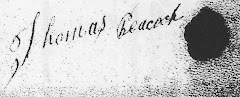
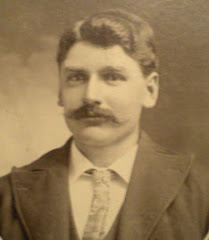
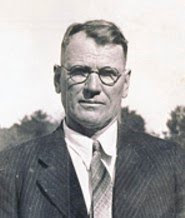
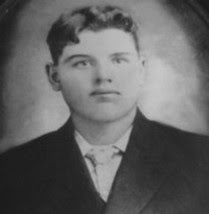
There must have been many interesting conversations around the
Peacock dinner tables in King Township in the late 1860s and early
1870s. Canada became a country in 1867, free grant land became
available farther north in Ontario in 1868, Manitoba entered
Confederation in 1870 after the Red River Rebellion and British
Columbia joined the following year, the railway was being built to
the West, and free grant land was offered in Manitoba in 1872.
There were opportunities to move both within Canada and beyond.
South of the border, there was a significant Irish population in
major cities such as Boston, New York, Philadelphia, Pittsburgh,
Detroit, Chicago, St. Louis, and San Francisco and therefore con-
nections for Irish expatriates. Because the passage to Canada
was shorter and therefore cheaper, many Irish came first to
Canada and then moved on to the US where work was available
in cities. It must have been a very exciting time in the history of
North America and especially for the young men full of hope and
dreams for their future.
Showing posts with label Ontario History. Show all posts
Showing posts with label Ontario History. Show all posts
Sunday, August 24, 2008

Wednesday, August 6, 2008
History of Falkenburg, Muskoka
This article appears on a website devoted to abandoned
communities in Ontario. Click on the heading to see the website
and some old photos of Falkenburg.
FALKENBURG (Also known as Falconburg)
Falkenburg was another settlement which popped up along the
Colonization Roads of Ontario. In this case it was the Muskoka
Road which the Ontario Government decided to construct in the
hopes of luring settlers to the area.
Beginning in 1859, teams of men were employed to build the road.
They chose to use portable sawmills while planking the road as it
was easier than moving the lumber as they progressed. The
Muskoka Road was approximately 16 feet wide with one side built
on an incline to allow water to drain off. Constructing a road out of
lumber posed problems, however. When bush fires occurred, any
burning trees that fell on the road resulted in igniting the road
planks. Also, the stagecoach services running along the road would
cut the wood with their sharp horseshoes. When the Muskoka Road
was completed, it would run 210 km to the city of North Bay.
Falkenburg was one of the first settlements to lure residents from
overseas looking to settle along the Muskoka Road. Being at the
southern end of the road, Falkenburg was seen as a favorable place
to live rather than travel northward. Matthias Moore was one such
immigrant to arrive from overseas and settle in Falkenburg. Moore
wasted no time in constructing a saw and shingle mill to provide
lumber for the ongoing construction.
The post office opened in 1863 with 26 year old William Holditch
being the first postmaster. Moore took over in 1872 until his death
in 1893 when Robert George would take over.
Stagecoaches were constantly running passengers to Bracebridge.
Two hotels were built to accomodate visitors along with a church,
blacksmith and general store.
The railway soon appeared out of the forest but a few kilometres
south of Falkenburg. There, a train station was built under the
name of Falkenburg Station. With more passengers choosing to
use the railway rather than stagecoach, Falkenburg's importance
began to diminish.
Today you will find remains of an old mill on the western side of
the town. It can be found at the end of a dead-end road, where
the Moore cemetery also happens to be.
Falkenburg is rather easy to find. It is on Muskoka Road 4 which
parallels Highway 11. As you drive north from Bracebridge along
Muskoka Road 4, you will pass Falkenburg Station. After you pass
the second set of railway tracks, Falkenburg will be on the eastern
side (a right hand turn).
communities in Ontario. Click on the heading to see the website
and some old photos of Falkenburg.
FALKENBURG (Also known as Falconburg)
Falkenburg was another settlement which popped up along the
Colonization Roads of Ontario. In this case it was the Muskoka
Road which the Ontario Government decided to construct in the
hopes of luring settlers to the area.
Beginning in 1859, teams of men were employed to build the road.
They chose to use portable sawmills while planking the road as it
was easier than moving the lumber as they progressed. The
Muskoka Road was approximately 16 feet wide with one side built
on an incline to allow water to drain off. Constructing a road out of
lumber posed problems, however. When bush fires occurred, any
burning trees that fell on the road resulted in igniting the road
planks. Also, the stagecoach services running along the road would
cut the wood with their sharp horseshoes. When the Muskoka Road
was completed, it would run 210 km to the city of North Bay.
Falkenburg was one of the first settlements to lure residents from
overseas looking to settle along the Muskoka Road. Being at the
southern end of the road, Falkenburg was seen as a favorable place
to live rather than travel northward. Matthias Moore was one such
immigrant to arrive from overseas and settle in Falkenburg. Moore
wasted no time in constructing a saw and shingle mill to provide
lumber for the ongoing construction.
The post office opened in 1863 with 26 year old William Holditch
being the first postmaster. Moore took over in 1872 until his death
in 1893 when Robert George would take over.
Stagecoaches were constantly running passengers to Bracebridge.
Two hotels were built to accomodate visitors along with a church,
blacksmith and general store.
The railway soon appeared out of the forest but a few kilometres
south of Falkenburg. There, a train station was built under the
name of Falkenburg Station. With more passengers choosing to
use the railway rather than stagecoach, Falkenburg's importance
began to diminish.
Today you will find remains of an old mill on the western side of
the town. It can be found at the end of a dead-end road, where
the Moore cemetery also happens to be.
Falkenburg is rather easy to find. It is on Muskoka Road 4 which
parallels Highway 11. As you drive north from Bracebridge along
Muskoka Road 4, you will pass Falkenburg Station. After you pass
the second set of railway tracks, Falkenburg will be on the eastern
side (a right hand turn).
Sunday, August 3, 2008
Greener Fields - Muskoka District
The following article was taken from the Muskoka
Parry Sound Genealogy GroupWebsite.
Click on the title above to see the original.
History of Muskoka District
This article first appeared in the November 1985 newsletter,
Volume 1 - Number 2
Beginning in the late 1840's, the Ontario government gradually
implemented a policy of northern expansion in Canada West.
As part of this policy, Muskoka was surveyed and made accessible
during the next two decades.
In 1850, a treaty was signed between the Honorable B. Robinson
and 36 chiefs of the Ojibway Nation ceding to the government
the parcel of land northwest of Penetanguishine to Sault Saint
Marie and eastward to the Ottawa River. In 1852 a resolution
was introduced urging implementation of a free land grant policy.
Despite opposition and reports that "the country was unfit as a
whole for agricultural purposes" in 1857 Muskoka and Macaulay
Townships were surveyed. The following year the first Muskoka
road was surveyed from Washago to Muskoka Falls and
settlement was underway.
Settlement was slow prior to the passing of the Free Grant and
Homestead Act of 1868. The obligations of the settlers in this act
were "to clear and have under cultivation at least 15 acres, two acres
of which were to be cleared annually during the 5 years following the
date of location; to build a house at least 16'x20' and to have actually
and continually resided upon the land for 5 years after date of location."
Each settler over 18 years of age could receive 100 acres or with a
family, 200 acres. (The act also applied to the townships of Parry Sound
District). All applications were to made to Charles W. Lount, Crown
Land Agent in Bracebridge.
A strong campaign was carried out to attract settlers. In the late
1860's posters and pamphlets were distributed in Canada, Britain
and several European countries. By 1871 the population of Muskoka
was 6,000. By 1881 the population increased to 13,000.
Parry Sound Genealogy GroupWebsite.
Click on the title above to see the original.
History of Muskoka District
This article first appeared in the November 1985 newsletter,
Volume 1 - Number 2
Beginning in the late 1840's, the Ontario government gradually
implemented a policy of northern expansion in Canada West.
As part of this policy, Muskoka was surveyed and made accessible
during the next two decades.
In 1850, a treaty was signed between the Honorable B. Robinson
and 36 chiefs of the Ojibway Nation ceding to the government
the parcel of land northwest of Penetanguishine to Sault Saint
Marie and eastward to the Ottawa River. In 1852 a resolution
was introduced urging implementation of a free land grant policy.
Despite opposition and reports that "the country was unfit as a
whole for agricultural purposes" in 1857 Muskoka and Macaulay
Townships were surveyed. The following year the first Muskoka
road was surveyed from Washago to Muskoka Falls and
settlement was underway.
Settlement was slow prior to the passing of the Free Grant and
Homestead Act of 1868. The obligations of the settlers in this act
were "to clear and have under cultivation at least 15 acres, two acres
of which were to be cleared annually during the 5 years following the
date of location; to build a house at least 16'x20' and to have actually
and continually resided upon the land for 5 years after date of location."
Each settler over 18 years of age could receive 100 acres or with a
family, 200 acres. (The act also applied to the townships of Parry Sound
District). All applications were to made to Charles W. Lount, Crown
Land Agent in Bracebridge.
A strong campaign was carried out to attract settlers. In the late
1860's posters and pamphlets were distributed in Canada, Britain
and several European countries. By 1871 the population of Muskoka
was 6,000. By 1881 the population increased to 13,000.
King Twp. Miscellaneous
Click on the heading to see a map of Central Ontario
History of King Township
1. For centuries the First Nations lived in and traveled through
the area that became the Township of King. They used the
Toronto Carrying Place Trail, a major route along the Humber
and Holland Rivers between Lake Ontario and Lake Simcoe.
Later French explorers and fur traders also used the trail. In
the Toronto Purchase of 1788 the British crown purchased from
the Mississauga's 101,528 hectares of Lands north of Lake
Ontario which formed the future York County. Many of the
earliest land grants of 200 acre lots were to Quakers and
Pennsylvania and other United Empire Loyalists. The
population of 20 residents in 1800 grew to 160 in 1809,
394 in 1823, 5,574 by 1850 and by the 1871 census there
were 7,482 residents. Today, King's population is approxi-
mately 21,000.
( Source: pub25.bravenet.com/photocenter/album)
2. The Canada Company
The Canada Company was a large private chartered British
land development company, incorporated by an act of British
parliament on July 27, 1825, to aid the colonization of Upper
Canada. Canada Company assisted emigrants by providing good
ships, low fares, implements and tools, and inexpensive land.
Scottish novelist, John Galt, was the company's first Canadian
superintendent. The government of Upper Canada sold the
company 10,000 km² of land for 341 000 pounds. Slightly less
than half of the land that was purchased comprised what would
become the Huron Tract, located on the eastern shore of Lake
Huron, the remainder, located in other areas of Upper Canada,
became Clergy reserves under the control of the Clergy
Corporation. Galt selected Guelph, Ontario as the company's
headquarters. The company surveyed and subdivided this
massive area, built roads, mills, and schools and advertised it
to buyers in Europe. The company then assisted in the migration
of new settlers, bringing them to the area by means of a boat,
which the company also owned, on Lake Ontario.
The company's mismanagement and corruption, and its close
alliance with the Tory elites, known as the Family Compact, was
an important contributing factor to the Upper Canada Rebellion
in 1837. The company was dissolved on December 18, 1953.
(From Wikipedia - the free encyclopedia)
Note:
The 1878 atlas of York County states that Lots 15 to 20 on
Concession VII of King Township belonged originally to the Canada
Company.
Land agent’s offices sometimes helped settlers forward money
to relatives in the home country. These records should be
investigated as a source of genealogical information.
3. King Township Today
King (2006 population 19,487) is a township in York Region
north of Toronto, within the Greater Toronto Area in Ontario,
Canada. First settled 1802 / township incorporated 1850.
King features some of the most picturesque countryside in Ontario.
The rolling hills of the Oak Ridges Moraine are King's most
prominent geographical features. The Holland Marsh, considered
to be Ontario's "vegetable basket", is also located in King Township.
King is also known for its prestigious horse farms and cattle farms.
Though King Township is predominantly rural, most of its residents
are concentrated in the communities of King City, Nobleton, and
Schomberg.
(From Wikipedia, the free encyclopedia)
History of King Township
1. For centuries the First Nations lived in and traveled through
the area that became the Township of King. They used the
Toronto Carrying Place Trail, a major route along the Humber
and Holland Rivers between Lake Ontario and Lake Simcoe.
Later French explorers and fur traders also used the trail. In
the Toronto Purchase of 1788 the British crown purchased from
the Mississauga's 101,528 hectares of Lands north of Lake
Ontario which formed the future York County. Many of the
earliest land grants of 200 acre lots were to Quakers and
Pennsylvania and other United Empire Loyalists. The
population of 20 residents in 1800 grew to 160 in 1809,
394 in 1823, 5,574 by 1850 and by the 1871 census there
were 7,482 residents. Today, King's population is approxi-
mately 21,000.
( Source: pub25.bravenet.com/photocenter/album)
2. The Canada Company
The Canada Company was a large private chartered British
land development company, incorporated by an act of British
parliament on July 27, 1825, to aid the colonization of Upper
Canada. Canada Company assisted emigrants by providing good
ships, low fares, implements and tools, and inexpensive land.
Scottish novelist, John Galt, was the company's first Canadian
superintendent. The government of Upper Canada sold the
company 10,000 km² of land for 341 000 pounds. Slightly less
than half of the land that was purchased comprised what would
become the Huron Tract, located on the eastern shore of Lake
Huron, the remainder, located in other areas of Upper Canada,
became Clergy reserves under the control of the Clergy
Corporation. Galt selected Guelph, Ontario as the company's
headquarters. The company surveyed and subdivided this
massive area, built roads, mills, and schools and advertised it
to buyers in Europe. The company then assisted in the migration
of new settlers, bringing them to the area by means of a boat,
which the company also owned, on Lake Ontario.
The company's mismanagement and corruption, and its close
alliance with the Tory elites, known as the Family Compact, was
an important contributing factor to the Upper Canada Rebellion
in 1837. The company was dissolved on December 18, 1953.
(From Wikipedia - the free encyclopedia)
Note:
The 1878 atlas of York County states that Lots 15 to 20 on
Concession VII of King Township belonged originally to the Canada
Company.
Land agent’s offices sometimes helped settlers forward money
to relatives in the home country. These records should be
investigated as a source of genealogical information.
3. King Township Today
King (2006 population 19,487) is a township in York Region
north of Toronto, within the Greater Toronto Area in Ontario,
Canada. First settled 1802 / township incorporated 1850.
King features some of the most picturesque countryside in Ontario.
The rolling hills of the Oak Ridges Moraine are King's most
prominent geographical features. The Holland Marsh, considered
to be Ontario's "vegetable basket", is also located in King Township.
King is also known for its prestigious horse farms and cattle farms.
Though King Township is predominantly rural, most of its residents
are concentrated in the communities of King City, Nobleton, and
Schomberg.
(From Wikipedia, the free encyclopedia)
Thursday, July 24, 2008
Toronto Irish Famine Memorial - June/2007
Click on the title to connect to the Ireland Park Foundation website.
In the summer of 2007, the Irish Park Foundation of Toronto opened
the Irish Famine Memorial at the southeast corner of Bathurst Quay
on Lake Ontario. It’s purpose is to acknowledge and honour the
thousands of Irish immigrants who arrived in Toronto at the peak of
the potato famine in the summer of 1847. At the time, the population
of the city was about 20,000. The newcomers numbered about 39,000.
Almost half a million Irish people had already come to British North
America beginning in the 1790’s. They were the back bone of rural
and urban Upper Canada. However, the ‘Great Famine’ which was
experienced all over Europe, was most seriously felt in Ireland.
Thousands of desperate people looked to escape the horror.
Eleven hundred of the 39,000 who arrived in Toronto that summer
died in ‘fever sheds’ on the harbour because the city couldn’t
accommodate the influx of people and because disease and hunger
were rampant among them. About 75 per cent of the dead were
buried in the Catholic Cemetery, 305 at St. James Anglican
cemetery and the remainder at Potter’s Field (Bloor and Yonge).
Until that time, Irish immigrants to Canada had been primarily
protestant.
Toronto politicians feared that the immigration would continue, but
in 1848, those leaving Ireland chose the United States as their
destination. And most of the immigrants who had arrived the
previous year left Toronto to find work or to be reunited with
other family members elsewhere in British North America or the
United States. It has been estimated that less than one thousand
of the newcomers remained in Toronto permanently. However,
the unfortunate result of the summer of 1847 was that future Irish
immigrants were met with hostility in the city.
To view photos of the Irish Famine Memorial and for further history
of the arrival of the Irish in Toronto in 1847, written by Professor
Mark G. McGowan with Michael Chard, St. Michael's College,
University of Toronto, see the Ireland Park Foundation website -
http://www.irelandparkfoundation.com/index.php
In the summer of 2007, the Irish Park Foundation of Toronto opened
the Irish Famine Memorial at the southeast corner of Bathurst Quay
on Lake Ontario. It’s purpose is to acknowledge and honour the
thousands of Irish immigrants who arrived in Toronto at the peak of
the potato famine in the summer of 1847. At the time, the population
of the city was about 20,000. The newcomers numbered about 39,000.
Almost half a million Irish people had already come to British North
America beginning in the 1790’s. They were the back bone of rural
and urban Upper Canada. However, the ‘Great Famine’ which was
experienced all over Europe, was most seriously felt in Ireland.
Thousands of desperate people looked to escape the horror.
Eleven hundred of the 39,000 who arrived in Toronto that summer
died in ‘fever sheds’ on the harbour because the city couldn’t
accommodate the influx of people and because disease and hunger
were rampant among them. About 75 per cent of the dead were
buried in the Catholic Cemetery, 305 at St. James Anglican
cemetery and the remainder at Potter’s Field (Bloor and Yonge).
Until that time, Irish immigrants to Canada had been primarily
protestant.
Toronto politicians feared that the immigration would continue, but
in 1848, those leaving Ireland chose the United States as their
destination. And most of the immigrants who had arrived the
previous year left Toronto to find work or to be reunited with
other family members elsewhere in British North America or the
United States. It has been estimated that less than one thousand
of the newcomers remained in Toronto permanently. However,
the unfortunate result of the summer of 1847 was that future Irish
immigrants were met with hostility in the city.
To view photos of the Irish Famine Memorial and for further history
of the arrival of the Irish in Toronto in 1847, written by Professor
Mark G. McGowan with Michael Chard, St. Michael's College,
University of Toronto, see the Ireland Park Foundation website -
http://www.irelandparkfoundation.com/index.php
Tuesday, July 22, 2008
1853 TAX ASSESSMENT ROLLS - Toronto
Column 28 - “Statue Labour – Persons 21-60”
The book and CD version of the 1853 Tax Assessment for Toronto
provides the following information about Statute Labour.
“Prior to the development of a comprehensive system of property
taxes, repair work on bridges and roads was the responsibility of
the fronting property owners. This work was described as ‘statute
labour.’ As an alternative, the property owner could make a cash
payment in lieu of physical work. Overtime, cash payments
became the norm and the work was carried out by contract labour.
This column records the number of days each occupant was
assessed. Persons over sixty were exempt which was why the age
column was used.
“Column 24 was the taxable income of the person or proprietor.”
The first column in this assessment roll gives a number for each
property. Hugh Peacock is listed below a Mr. Horwood,
hotel keeper along with a number of other men. They all have a
different property number than the hotel, therefore the properties
were separate, and each of the men was required to do 10 days of
statute labour in lieu of property taxes. Column 24 provides
no taxable income for these men.
The book and CD version of the 1853 Tax Assessment for Toronto
provides the following information about Statute Labour.
“Prior to the development of a comprehensive system of property
taxes, repair work on bridges and roads was the responsibility of
the fronting property owners. This work was described as ‘statute
labour.’ As an alternative, the property owner could make a cash
payment in lieu of physical work. Overtime, cash payments
became the norm and the work was carried out by contract labour.
This column records the number of days each occupant was
assessed. Persons over sixty were exempt which was why the age
column was used.
“Column 24 was the taxable income of the person or proprietor.”
The first column in this assessment roll gives a number for each
property. Hugh Peacock is listed below a Mr. Horwood,
hotel keeper along with a number of other men. They all have a
different property number than the hotel, therefore the properties
were separate, and each of the men was required to do 10 days of
statute labour in lieu of property taxes. Column 24 provides
no taxable income for these men.
Sunday, July 20, 2008
TORONTO - Mid 19th Century
Old Town Toronto – material for publicity for Marcus Garvey Event, 2007
By Karolyn Smardz Frost
In 1793, the Town of York was laid out by engineers of the Queen’s
Rangers regiment, under Britain’s first Lieutenant Governor of
Upper Canada, John Graves Simcoe.
At the foot of Berkeley Street were constructed Upper Canada’s
first Parliament Buildings. Cooper’s Wharf at the foot of Church
Street was the main public docking facilities and here ships
disembarked their passengers and vast quantities of goods.
Along Front Street were several hotels and taverns, as well as mer-
chants and craftsmen that serviced the shipping industry. The
Old Town of York remained the city centre for many years.
The shops that lined King St., the main commercial street, were
Elegant and well-stocked, according to Charles Dickens who visited
in 1842. “The town itself is full of life and motion, bustle, business,
and improvement. The streets are well paved, and lighted with gas;
the houses are large and good; the shops excellent…...” he wrote in
his American Notes.
The district to the east, south of King Street as far as the Don River
was “Government Park where the already-polluted marshes of the
Don Mouth were located. Industry early took advantage of the low
land prices……. Annexed to the newly-incorporated Toronto in 1834,
this area was known as St. Lawrence Ward. Many working class
families settled along the muddy and unpaved streets and kept cattle
and horses, as well as large vegetable gardens.
The Catholic Irish tended to settle north of King Street in the district
that later would be called “Cabbagetown,” after their habit of planting
the vegetable in every bit of available soil. They mainly attended St.
Paul’s Church at Queen and Power Streets, first constructed in 1824.
The Protestant or “Ulster” Irish lived south of King Street. When the
Irish Potato Famine forced thousands to the New World, so many
came to St. Lawrence Ward that part of it received the name,
“Corktown,” after County Cork.
In 1842 “Little” Trinity Church, Toronto’s oldest surviving church
building was built. Next door stands Enoch Turner Schoolhouse,
Toronto’s first free school. The City Hall, built in 1844 on Front
Street, housed the City Council Chambers, Police Department and
municipal offices. Some of this building can still be seen within the
South St.Lawrence Market building today.
Much of Old Town Toronto was destroyed in the Great Toronto
Fire of 1849. In 1850 a beautiful structure rose at the corner of
King and Jarvis, the St. Lawrence Hall, a public building and
meeting space still used today. Here in 1851 the Anti-Slavery
Society of Canada was founded, Jenny Lind, the “Swedish
Nightingale,” sang, and, later, speeches demanding equal rights
for women rang out.
The Great Fire also destroyed St. James Cathedral, (Anglican)
which was rebuilt 1853. In 1859 the Toronto Board of Education
built Palace Street School at the corner of Front and Cherry Street..
http://www.oldtowntoronto1793.com/pages/Old_Town_Toronto_1793_pg168.aspx
By Karolyn Smardz Frost
In 1793, the Town of York was laid out by engineers of the Queen’s
Rangers regiment, under Britain’s first Lieutenant Governor of
Upper Canada, John Graves Simcoe.
At the foot of Berkeley Street were constructed Upper Canada’s
first Parliament Buildings. Cooper’s Wharf at the foot of Church
Street was the main public docking facilities and here ships
disembarked their passengers and vast quantities of goods.
Along Front Street were several hotels and taverns, as well as mer-
chants and craftsmen that serviced the shipping industry. The
Old Town of York remained the city centre for many years.
The shops that lined King St., the main commercial street, were
Elegant and well-stocked, according to Charles Dickens who visited
in 1842. “The town itself is full of life and motion, bustle, business,
and improvement. The streets are well paved, and lighted with gas;
the houses are large and good; the shops excellent…...” he wrote in
his American Notes.
The district to the east, south of King Street as far as the Don River
was “Government Park where the already-polluted marshes of the
Don Mouth were located. Industry early took advantage of the low
land prices……. Annexed to the newly-incorporated Toronto in 1834,
this area was known as St. Lawrence Ward. Many working class
families settled along the muddy and unpaved streets and kept cattle
and horses, as well as large vegetable gardens.
The Catholic Irish tended to settle north of King Street in the district
that later would be called “Cabbagetown,” after their habit of planting
the vegetable in every bit of available soil. They mainly attended St.
Paul’s Church at Queen and Power Streets, first constructed in 1824.
The Protestant or “Ulster” Irish lived south of King Street. When the
Irish Potato Famine forced thousands to the New World, so many
came to St. Lawrence Ward that part of it received the name,
“Corktown,” after County Cork.
In 1842 “Little” Trinity Church, Toronto’s oldest surviving church
building was built. Next door stands Enoch Turner Schoolhouse,
Toronto’s first free school. The City Hall, built in 1844 on Front
Street, housed the City Council Chambers, Police Department and
municipal offices. Some of this building can still be seen within the
South St.Lawrence Market building today.
Much of Old Town Toronto was destroyed in the Great Toronto
Fire of 1849. In 1850 a beautiful structure rose at the corner of
King and Jarvis, the St. Lawrence Hall, a public building and
meeting space still used today. Here in 1851 the Anti-Slavery
Society of Canada was founded, Jenny Lind, the “Swedish
Nightingale,” sang, and, later, speeches demanding equal rights
for women rang out.
The Great Fire also destroyed St. James Cathedral, (Anglican)
which was rebuilt 1853. In 1859 the Toronto Board of Education
built Palace Street School at the corner of Front and Cherry Street..
http://www.oldtowntoronto1793.com/pages/Old_Town_Toronto_1793_pg168.aspx
Subscribe to:
Posts (Atom)